Why Is Perfume Expensive in Nepal? How Duty, VAT, Retail Margin and Packaging Build the Price, and Where a Pokhara-Blended Bottle Saves You
Why is perfume expensive in Nepal? Follow duty, VAT, margins and packaging from factory to tag, and see where a Pokhara-made blend costs less.
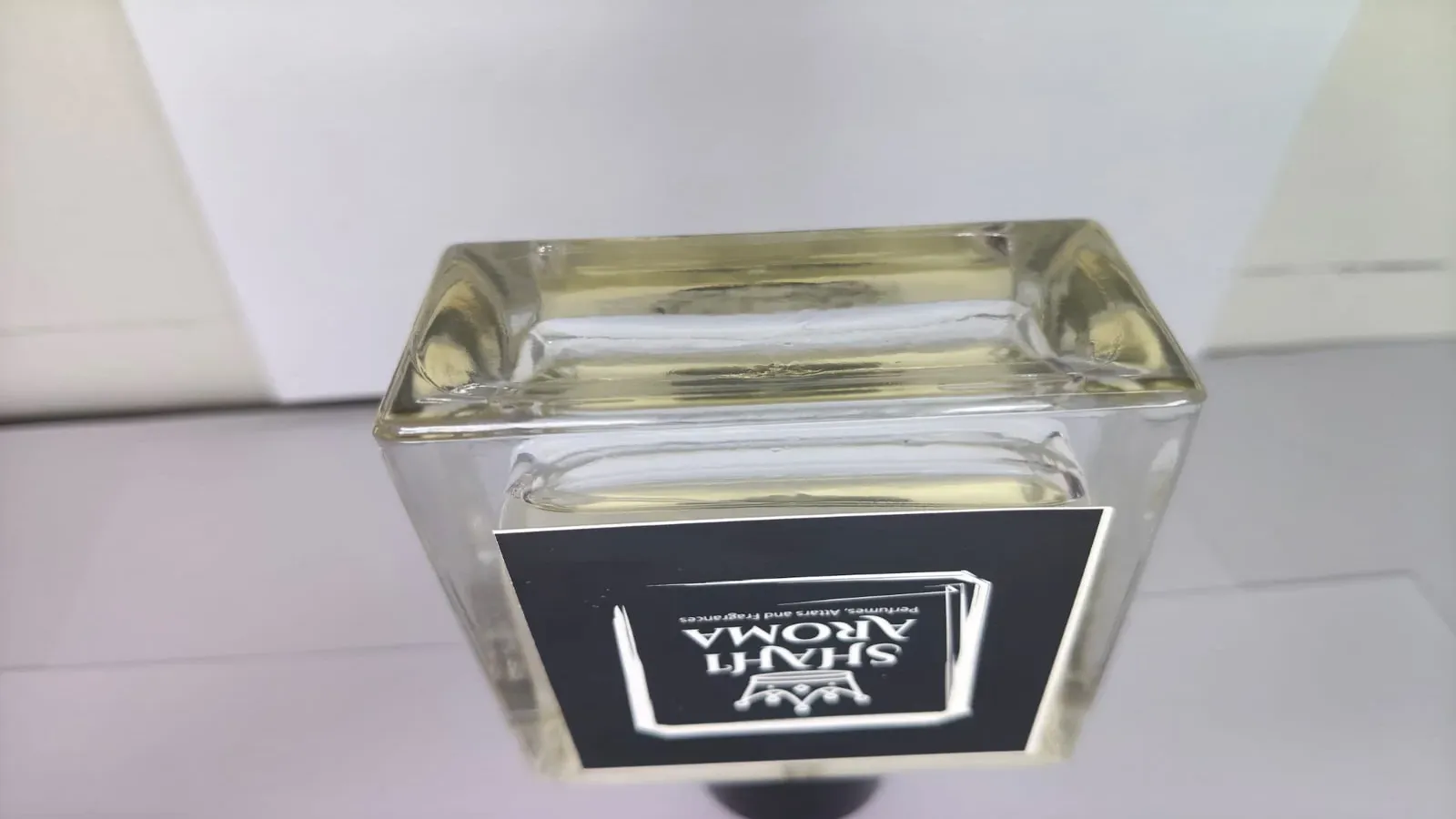
Why is perfume expensive in Nepal? Because an imported bottle is charged at every step between the factory and the shelf: freight, customs duty, VAT, an importer's margin and a retailer's margin. Each is calculated on the figure before it, so they compound instead of simply adding up. A blend made in Pokhara skips some of those steps. Our perfumes are priced at Rs. 1,500 for 50 ml and Rs. 3,000 for 100 ml on entry-level blends such as Sultan, and they go up to Rs. 5,800 for 100 ml.
This post walks the chain in order, shows how the layers compound with a made-up round number, and says which rates you should confirm with Nepal customs instead of trusting a blog. It also covers what you pay for besides the liquid, and what a house blend does and doesn't save you. We can't give you real import costs, and we say where that leaves gaps.
Why Is Perfume Expensive in Nepal? The Short Answer in One Chain
The chain runs: factory or wholesale price, then freight and insurance, then customs duty, then VAT, then the importer or distributor's margin, then the shop's margin. Only after all of that does a tag appear on the bottle. A designer bottle has to survive every one of those steps. A blend mixed and rested in Pokhara never crosses the border as finished perfume.
That is the whole argument. The rest of the post checks it against what we can and can't prove.
From Factory Price to Shelf Tag: The Layers in Order
Take a bottle whose wholesale value is 100 units. The number is invented. It is not the cost of any real bottle, ours or anyone's. The table uses the commonly quoted duty and VAT figures only to show the shape of the calculation.
| Layer | Charged on | Running total (illustration) |
|---|---|---|
| Wholesale value | — | 100 |
| Freight and insurance | Not modelled | Not modelled |
| Customs duty (if 15%) | The goods value | 115 |
| VAT (if 13%) | The duty-inclusive value | 129.95 |
| Importer or distributor margin | Whatever the importer paid | Unknown |
| Retailer margin | Whatever the shop paid | Unknown |
Even before freight and either margin, 100 has become about 130. Each margin is then a percentage of a number that is already inflated. That is why a bottle that looks modest at the factory gate arrives at the counter at a multiple of it.
Customs Duty and VAT on Perfume: What the Pages Say and Why You Should Check
Pages that explain this usually quote a 15% customs duty plus 13% VAT. Those pages are courier and import-service sites, not official sources, and search results disagree with each other. Treat 15% as commonly quoted, not confirmed.
VAT generally applies to the duty-inclusive value, which is how the table above treats it. We haven't verified that for perfume specifically either. Perfume sits under a standard tariff heading in the international classification system (heading 3303), and the World Customs Organization explains how that system works. The rate itself is set by Nepal's customs office. If you are importing a bottle yourself, ask them for the current rate before you pay.
The Bottle, the Box and the Brand: What You Pay For Besides the Liquid
An imported designer price carries more than perfume. It includes the glass and cap, the outer carton, the advertising, any designer or celebrity licensing, and the distribution network that gets the bottle to a shelf. A fragrance-industry explainer on why perfume is expensive makes the same general point about brand, marketing, packaging and distribution.
We won't give you a percentage. Nobody has published one for Nepal that we could verify, and a made-up split would be worse than none. What you can say is that some of what you pay for is not in the bottle's liquid at all.
Why a Retail Margin Is Not Greed, and Where It Becomes Hard to See
A shop that imports carries stock it has already paid for, rent, bottles that don't sell, and a sharp rise in demand around Dashain, Tihar and wedding season. The Kathmandu Post reported perfume imports growing on gifting demand. That article dates from 2018, so read it as background, not as current figures.
A margin is a fair thing for a shop to charge. The problem is that it is the layer almost no one discloses. We don't publish our own import costs either, so we can't show you a landed-cost breakdown for any bottle, and this post doesn't pretend to.
How a Blend Made and Macerated in Pokhara Can Sit Where It Does
We blend our compositions in Pokhara and rest them before sale. That means we don't ship finished perfume across the border. A local blend skips finished-goods import, a distributor tier, licensed brand marketing and a presentation box built to justify a high tag. We can't tell you our raw materials are free of cost. Some inputs may still carry their own charges, and we haven't published them.
Catalogue prices, from the shop list
Sultan, Shahi Orchid, Marine King and Classic Musk are each Rs. 1,500 for 50 ml and Rs. 3,000 for 100 ml. Heavier-priced blends such as Wanted 2.0 are Rs. 2,900 for 50 ml and Rs. 5,800 for 100 ml. You can check every price on the perfume page of the shop. For the cost per millilitre, read Perfume Price in Pokhara, which covers it so we don't repeat it here.
Maceration: The Time You Pay With Instead of Import Fees
Resting a blend costs time. It doesn't cost a customs line. The oils and alcohol settle together before the bottle leaves the shop, and that is time we spend, not money we hand to anyone at the border. We explain the process in why we let a fragrance rest.
Time is still a cost. It ties up stock and delays sales. It is just a cost we carry in the workshop, not one added at the border.
What Cheap Does and Doesn't Mean: Fakes, Honest Names and Lasting Power
A low price is not proof of a fake. A fake is a bottle that claims a brand it isn't. A Shahi Aroma blend carries its own name and makes no brand claim, and our compositions are described as inspired by, never as a designer house's product. If counterfeits worry you, how to spot a fake perfume in Nepal lists the checks.
No guide can tell you what a perfume does on your skin. Lasting power depends on concentration, on your skin, and on Pokhara's humidity. We can't promise a local blend matches an imported designer bottle. Smell it and wear it before you decide. Buy Perfume in Pokhara explains what to check before you pay.
Questions People Ask
How much customs duty and VAT do I pay on imported perfume in Nepal?
Pages commonly quote 15% duty plus 13% VAT, but they are courier sites, not official sources. We haven't verified either rate for perfume. Ask Nepal customs for the current rate under heading 3303 before you rely on any figure.
Is the same perfume cheaper in India or Dubai than in Nepal?
We can't say. Prices differ by market, and we haven't verified a comparison. Compare current tags for the exact bottle and size before you decide it is worth the trip.
How much of a perfume's price is the bottle, the box and the brand?
We don't have a verified figure, so we won't give one. Glass, cap, carton, advertising, licensing and distribution are all inside an imported tag. The proportion varies by brand.
Is a locally blended perfume cheaper without being low quality?
It is cheaper partly because it skips finished-goods import, a distributor tier and licensed marketing. Quality is a separate question that only your nose and skin can answer. Test it at the counter.
Do I get the same lasting power from a locally blended perfume as from an imported one?
We can't promise that. Lasting power depends on the composition and on your skin. Wear a blend for a full day before you judge it.
The Short Version, and Where to Try a Bottle in Pokhara
Imported perfume is expensive because freight, duty, VAT and two margins compound on top of the factory price, and the packaging and brand add more. A blend made and rested in Pokhara skips some of those layers, so it can sit at Rs. 1,500 to Rs. 3,000 on the entry-level blends, but check your own skin before you trust any price.
The shop is at Newroad, Street-12, Pokhara 33700, open Sunday to Friday 10:00 to 19:00 and closed Saturday. Pay by cash on delivery, eSewa or Checkout by Fonepay. We dispatch within 1 to 2 working days: same or next day inside Pokhara, 2 to 4 days to the Kathmandu valley, and 3 to 7 days elsewhere. Any delivery charge is shown at checkout.
Browse the perfumes, visit us in Pokhara, or call or WhatsApp +977 9829184422.